
TARGET • STIMULATE • RESTORE

Shockwave Therapy In Bel Air, MD: A Personalized Pain Management Case Study

Persistent pain can affect more than just your comfort. It can make everyday activities increasingly difficult. One non-invasive option that may be considered is Shockwave Therapy in Bel Air, MD. 

At Bala Aesthetics & Medispa, Extracorporeal Shockwave Therapy (ESWT) offers a personalized approach to addressing selected tendon and soft-tissue concerns. This representative case study explores the assessment process, treatment planning, and how shockwave therapy may be considered for individuals experiencing persistent pain.

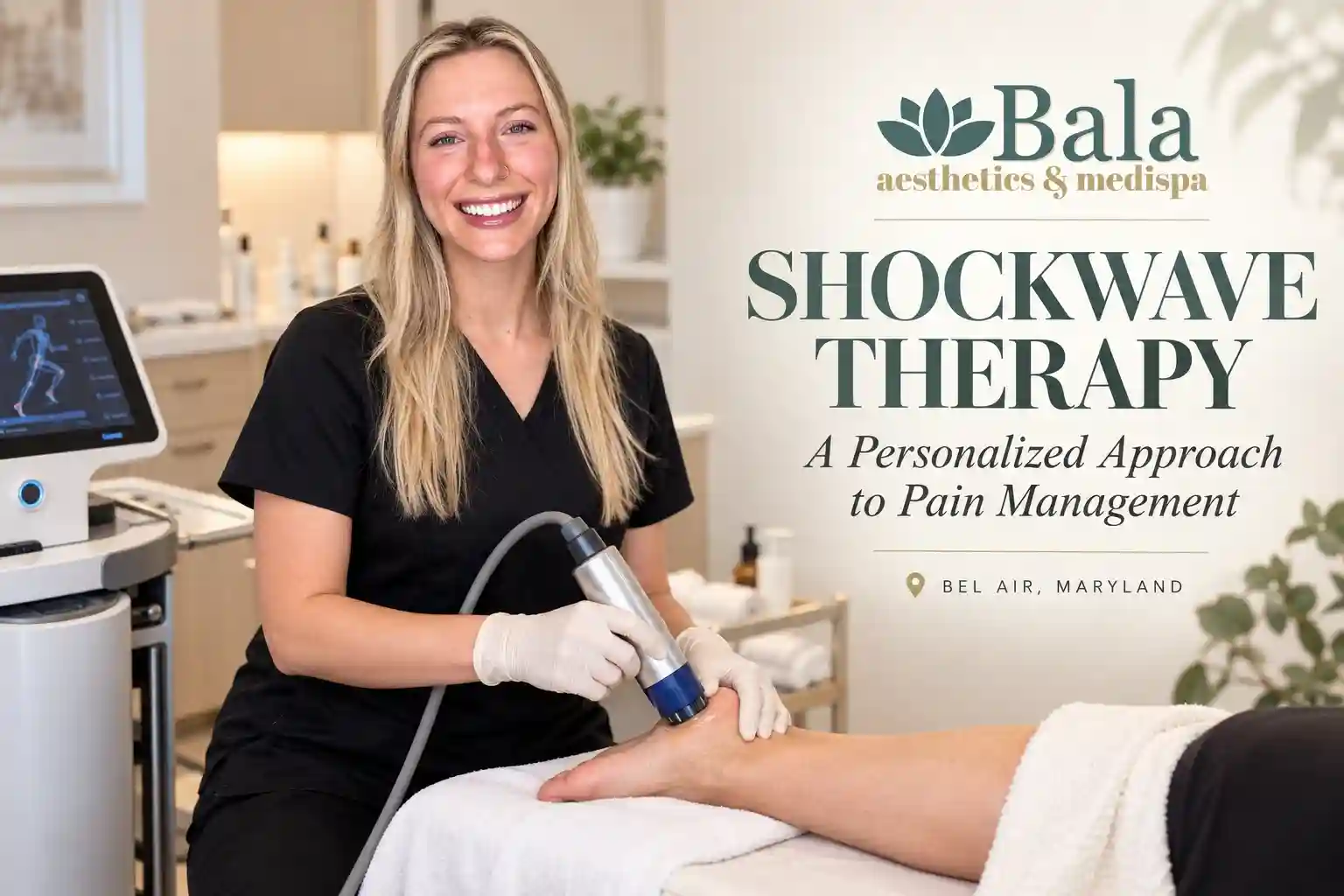
Registered nurse demonstrating Shockwave Therapy treatment at Bala Aesthetics and Medispa in Bel Air MD.

Understanding the Problem: When Pain Starts Affecting Daily Life

Imagine someone who regularly experiences discomfort around the heel, Achilles tendon, elbow, or shoulder.

At first, the pain may appear only during physical activity. Over time, however, it may become noticeable during everyday movements, such as walking, climbing stairs, lifting objects, or standing for extended periods.

Rest and basic self-care may not always provide enough relief, particularly when the underlying concern involves a chronic tendon or soft-tissue condition.

Common conditions that may lead someone to explore shockwave therapy include:

  • Plantar fasciitis and persistent heel pain
  • Achilles tendinopathy
  • Tennis elbow and golfer’s elbow
  • Selected shoulder tendon conditions
  • Patellar tendinitis and knee discomfort
  • Trochanteric bursitis and selected hip concerns
  • IT band syndrome
  • Shin splints
  • Myofascial trigger points and selected muscle conditions

These conditions have different causes and treatment requirements. A proper assessment is important before deciding whether shockwave therapy is appropriate.

A Personalized Assessment

Before recommending shockwave therapy, the provider evaluates the individual’s symptoms, medical history, and treatment goals.

Patient Assessment Includes:

  • Location and severity of discomfort.
  • Duration of symptoms.
  • Previous injuries and medical history.
  • Activities that aggravate symptoms.
  • Previous treatments and outcomes.
  • Current physical activity and daily routine.
  • Relevant medications and health conditions.
  • Individual treatment expectations.

Understanding the Appropriate Treatment Approach

Extracorporeal Shockwave Therapy (ESWT) uses controlled acoustic energy to target specific areas of musculoskeletal discomfort.

Unlike laser treatments, shockwave therapy uses mechanical sound-wave energy rather than light energy.

The acoustic pulses may influence local tissue-repair processes, circulation responses, and pain-related mechanisms.

Treatment Recommendations May Include:

  • Identifying the specific treatment area.
  • Selecting an appropriate shockwave therapy protocol.
  • Adjusting treatment intensity according to the affected area.
  • Establishing an appropriate session frequency.
  • Monitoring changes in discomfort and physical function.
  • Considering complementary rehabilitation when appropriate.

Treatment suitability depends on the underlying condition and individual assessment.

Personalized Shockwave Therapy Treatment

Treatment Overview

  • Treatment: Extracorporeal Shockwave Therapy (ESWT)
  • Technology: Controlled acoustic energy.
  • Application: Targeted treatment of selected tendon and soft-tissue areas.
  • Treatment approach: Non-invasive.
  • Sample treatment schedule: Approximately 3–5 sessions for several conditions, often spaced 5–10 days apart.
  • Customization: Treatment intensity, frequency, and number of sessions depend on individual needs and response.

Targeted Treatment Areas

  1. Plantar Fasciitis & Heel Pain: Treatment may target the affected plantar fascia area to help manage persistent heel discomfort.
  1. Achilles Tendinopathy: Acoustic energy may be directed toward the affected Achilles tendon, depending on symptom location and assessment.
  1. Tennis Elbow & Golfer’s Elbow: Treatment may focus on selected tendon regions associated with persistent elbow discomfort.
  1. Shoulder Tendon Conditions:  Shockwave therapy may be considered for selected shoulder conditions, including calcific tendinitis.
  1. Hip, Knee & Muscle Concerns: Treatment may be considered for selected conditions such as trochanteric bursitis, patellar tendinitis, IT band syndrome, shin splints, and myofascial trigger points.

A Step-by-Step Treatment Experience

Step 1: Consultation & Preparation

The provider reviews the individual’s symptoms, medical history, and treatment plan before identifying the targeted area.

Step 2: Comfortable Positioning

The individual is positioned comfortably to allow access to the affected treatment area.

Step 3: Application of Acoustic Energy

A handheld shockwave device delivers controlled acoustic pulses through the skin. A coupling gel may be used to help transmit the energy.

Step 4: Treatment Adjustment

Treatment intensity and application are adjusted according to the treatment protocol, affected area, and individual’s comfort.

Step 5: Post-Treatment Guidance

The provider discusses activity recommendations, possible temporary reactions, and follow-up appointments.

Some individuals experience tapping, pulsing, pressure, or temporary discomfort during treatment.

Why Shockwave Therapy Consultation Matters

A Personalized Approach to Managing Persistent Discomfort

Shockwave therapy may offer a non-surgical treatment option for selected musculoskeletal conditions.

Depending on the condition and individual response, treatment may help:

  1. Manage Discomfort: Support the management of discomfort associated with selected chronic tendon conditions.
  2. Support Tissue Recovery: Influence biological processes involved in tissue repair and remodeling.
  3. Support Mobility: Improve tolerance for everyday movements where treatment is effective.
  4. Target Specific Areas: Deliver acoustic energy to selected tendon and soft-tissue areas.
  5. Provide a Non-Surgical Option: Offer an alternative treatment approach for appropriate conditions.

Results vary between individuals. Shockwave therapy does not guarantee pain relief or replace all other medical treatments.

What Makes Bala Medispa Different?

At Bala Aesthetics & Medispa, the treatment approach focuses on understanding individual concerns and determining whether shockwave therapy may be appropriate.

  • Individualized treatment assessment.
  • Focus on selected tendon and soft-tissue concerns.
  • Non-invasive treatment approach.
  • Attention to individual comfort.
  • Treatment planning based on personal needs.
  • Guidance on aftercare and follow-up.

Aftercare Recommendations:

  • Follow the provider’s activity recommendations.
  • Avoid activities that significantly aggravate the treated area.
  • Follow the recommended treatment schedule.
  • Continue prescribed exercises or rehabilitation when appropriate.
  • Report unusual or worsening symptoms to your provider.

Frequently Asked Questions

What is Extracorporeal Shockwave Therapy (ESWT)?

Shockwave therapy is a non-invasive treatment that delivers controlled acoustic energy to targeted areas of the body. It may be considered for selected chronic tendon and soft-tissue conditions.

What conditions may benefit from shockwave therapy?

Selected conditions include plantar fasciitis, Achilles tendinopathy, tennis elbow, golfer’s elbow, certain shoulder tendon conditions, and selected muscle and soft-tissue concerns.

Is shockwave therapy a laser treatment?

No. Shockwave therapy uses mechanical acoustic energy rather than laser light.

How many shockwave therapy sessions may be needed?

Sample protocols for several conditions include approximately 3–5 sessions, often spaced 5–10 days apart. The recommended schedule depends on the individual’s condition and response.

Is shockwave therapy painful?

Some individuals experience tapping, pulsing, pressure, or temporary discomfort during treatment. Sensations vary depending on the treated area and treatment intensity.

Are there any side effects?

Temporary soreness, redness, swelling, tenderness, or sensitivity may occur following treatment.

How soon can I expect results?

Results vary. Some individuals may notice changes during the treatment course, while others may require additional time or a different treatment approach.

Is shockwave therapy suitable for everyone?

No. Treatment suitability depends on the individual’s diagnosis, medical history, symptoms, and other health considerations. A qualified provider should assess the individual before treatment.

Schedule Your Shockwave Therapy Consultation

Take the First Step Toward Understanding Your Treatment Options

Book Your Appointment Now

Case Studies

Recent Blogs